

Behind Every Bend: The Materials That Make Flexible PCBs Possible
Flexible printed circuits (FPCs) aren’t just “thin PCBs.” They’re the reason a smartwatch can wrap around your wrist, a foldable phone can close flat, and a car can pack dozens of sensors into tight spaces. But none of that works if the lamination materials can’t survive real-world bending, heat, and time.
If you’re designing or sourcing FPCs, here’s what actually matters in the lamination stack—beyond the generic datasheets.
1. Base Substrate: The Part That Bends (Without Breaking)
Think of the substrate as the skeleton of the FPC. It has to insulate, support copper traces, and take repeated flexing without cracking.
What engineers usually pick:
Polyimide (PI)
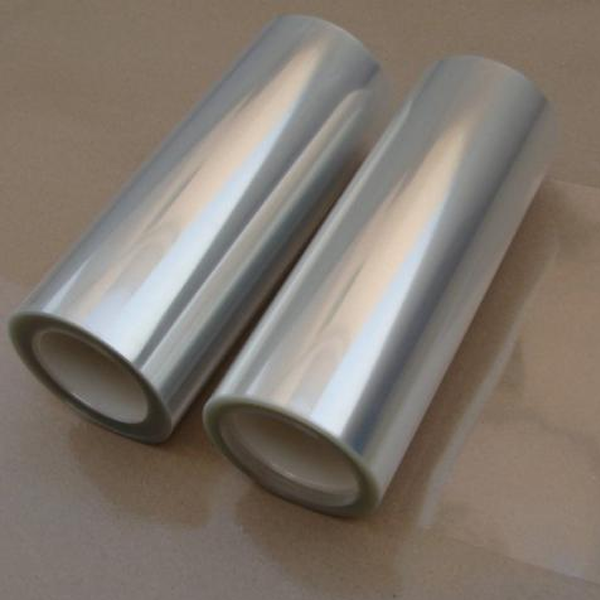
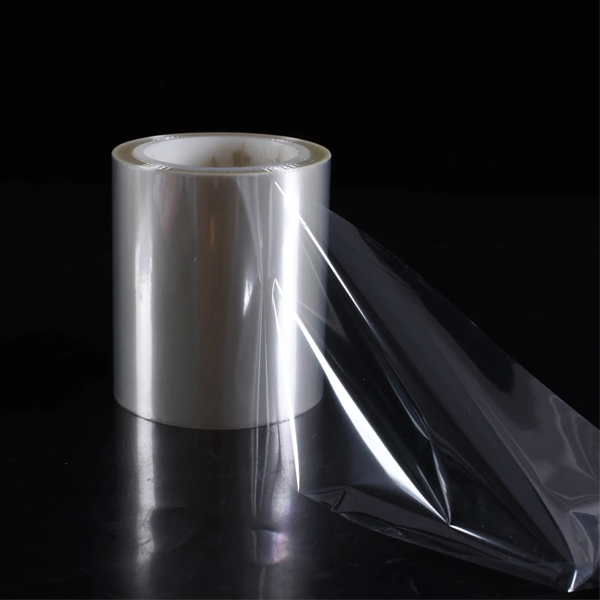
The default for a reason. PI handles 260 °C continuous use, shrugs off soldering heat, and survives thousands of bends. If your FPC goes into automotive, medical, or foldable devices, PI is usually non-negotiable.
(Example: DuPont Kapton-type films are everywhere for a reason.)
Polyester (PET)
Cheaper, stiffer, and fine for static or gently curved applications—think simple sensors or low-cost consumer gadgets. Just remember: PET softens above ~120 °C, so it’s not solder-friendly or long-cycle-flex material.
Fluoropolymers (e.g., PTFE)
Niche, but critical for high-frequency RF (5G, mmWave) where low dielectric loss matters more than cost. Expect higher prices and trickier processing.
Design tip: Don’t over-specify PI if PET does the job. Material cost drops fast, but you must accept the thermal and flex limits.
2. Adhesive: The Hidden Weak Point (Unless You Choose Right)
Adhesives bond copper and coverlay to the substrate. In many failed FPCs, the adhesive is the first thing to crack, bubble, or delaminate.
Three practical choices:
Epoxy-based adhesives
The workhorse. Good heat resistance, strong bonding to PI/PET, and decent process windows (150–180 °C cure). For high-flex designs, look for modified epoxy-phenolic blends that stay compliant after curing.
Acrylic adhesives
Fast-curing (sometimes room temp), very flexible, but weaker on heat and moisture resistance. Best for low-temp lamination or cost-driven projects where the FPC won’t see soldering or harsh environments.
Adhesive-free construction
Copper is directly bonded to PI via sputtering or thermal treatment—no glue layer. You get:
Downside: higher cost and tighter process control. Worth it for wearables and ultra-thin modules.
Thinner overall stack
Better thermal performance
Higher flex endurance
Red flag: If your FPC shows bubbles or edge lift after thermal cycling, your adhesive selection or curing profile is the first place to audit.
3. Copper Foil: Where Signal Meets Flex
Copper is the conductor, but not all copper behaves the same when bent.
Two main types:
Electrodeposited (ED) copper foil
Plated onto a drum → rough side for adhesion, smooth side for etching.
Common thickness: 9–70 µm. For flexible, high-density FPCs, 9–18 µm ED foil is typical.
Rolled Annealed (RA) copper foil
Rolled and annealed from ingot → uniform thickness, smoother surface, and dramatically better bend endurance.
Use RA when:
The circuit folds repeatedly (hinges, flip mechanisms)
You’re building medical or automotive life-safety products
Also worth noting: Bonding-enhanced foils (zinc-plated, silane-treated) improve adhesion to adhesives or adhesive-free PI, reducing delamination risk in humid or thermal-cycling environments.
Rule of thumb: If the bend radius is tight or the flex cycle count is high, RA copper pays for itself.
4. Coverlay: Protection That Still Bends
After etching, the copper needs protection—from scratches, moisture, dust, and shorts. That’s the coverlay’s job.
Common options:
PI coverlay
Matches the base substrate, so you get consistent thermal and mechanical behavior. Pre-cut windows expose pads and connectors. Ideal for automotive and industrial FPCs.
PET coverlay
Lower cost, lower heat tolerance. Fine for static or lightly flexing consumer products that never see reflow soldering.
Liquid Photoimageable (LPI) coverlay
A liquid epoxy/acrylic resin coated and photo-patterned like solder mask. Enables:
Often used in smartphone camera modules and high-density interconnects.
Very fine-pitch openings
Precise alignment to dense pads
Quick check: If your coverlay cracks along bend lines after a few cycles, either the material is too brittle or the bend radius is too aggressive for the selected film.
5. Stiffeners & Small Extras
Not every part of an FPC should flex.
Stiffeners (stainless steel, aluminum, or PI tabs) add local rigidity for connectors or component mounting.
High-temp PI tapes are handy for masking during soldering or temporary hold during lamination.
These don’t define the electrical performance, but they can make or break manufacturability and assembly yield.
What This Means for Your Next FPC Project
There’s no single “best” material set—only the right trade-off for your application:
High-flex, high-temp, high-reliability? → PI substrate + RA copper + epoxy adhesive (or adhesive-free) + PI coverlay
Cost-sensitive, low-flex consumer gadget? → PET substrate + ED copper + acrylic adhesive + PET/LPI coverlay
High-frequency RF module? → Fluoropolymer substrate + thin RA copper + adhesive-free bonding + LPI coverlay
If you’re iterating a design and unsure whether to stick with PI or drop to PET, or whether RA copper is worth the premium, send over your stack-up and expected bend cycles. We can sanity-check material choices before you lock tooling.
