

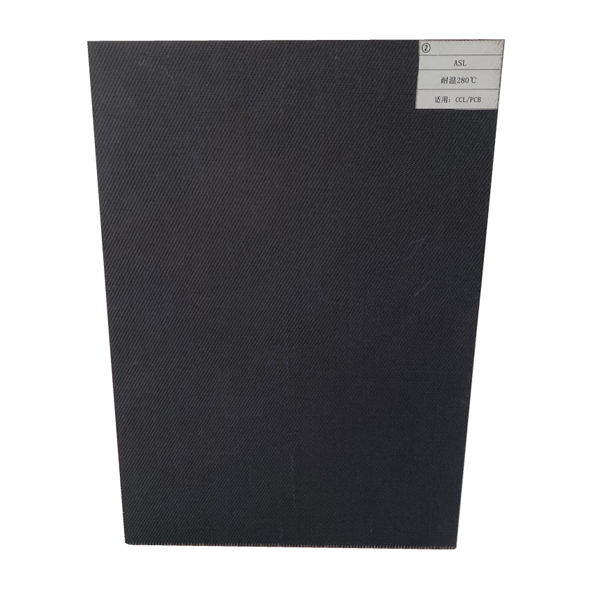
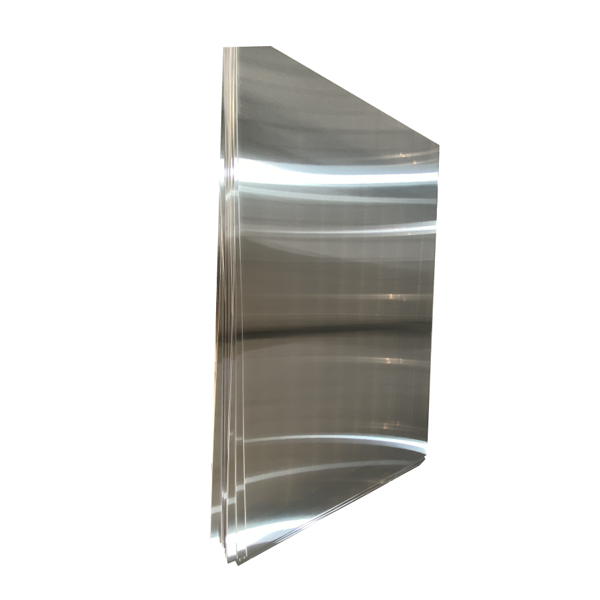
In PCB lamination production, carrier plates (PCB carriers) serve as key auxiliary tools to ensure lamination quality. They are designed to provide uniform pressure distribution on PCBs under high temperature and pressure, prevent board warpage or deformation, and avoid contamination or damage caused by direct contact with the lamination press. The selection of carrier plates should be based on a comprehensive evaluation of PCB characteristics, lamination process parameters, and production requirements. The core logic can be summarized as: match the product characteristics, adapt to process conditions, and balance cost and efficiency. Below are detailed selection dimensions and methods:
I. First Clarify PCB Characteristics: The Core Basis for Carrier Plate Selection
The physical and material properties of PCBs directly determine the fundamental requirements for carrier plates. Focus on the following four aspects:
PCB Size and Thickness
For thin PCBs (≤ 0.8 mm): The carrier must have high flatness (≤ 0.02 mm/m) to prevent local warping due to carrier surface irregularities.
For thick PCBs (≥ 2.0 mm) or multilayer boards (≥ 12 layers): The carrier must possess sufficient rigidity (resistance to bending) to avoid deflection under lamination pressure, which can cause inconsistent thickness between the center and edges.
Size: The carrier plate should be slightly larger than the PCB (typically 5–10 mm extra on each side) to ensure full support and prevent overhang, which can cause uneven edge pressure during lamination. For mass production with varying PCB sizes, prioritize carriers compatible with the largest size (to minimize changeover) or customizable carriers with adjustable positioning (e.g., movable stops).
Thickness:
Complexity of PCB Structure
Buried/blind via boards: The carrier surface must be smooth and free of protrusions (to avoid via deformation); prioritize plates with smooth, pore-free surfaces.
Stepped boards (local thickness variation ≥ 0.3 mm): The carrier should feature a relief design at the step location (e.g., local grooves) or use a flexible-support carrier (e.g., with a high-temp silicone pad to accommodate height differences).
PCBs with plated through-holes: The carrier surface should avoid sharp edges to prevent resin squeeze-out or hole-wall collapse; opt for plates with rounded-edge treatment.
Standard flat PCBs (no buried/blind vias, steps, or grooves): Require only basic flatness and rigidity.
Special-structure PCBs (e.g., buried/blind via boards, stepped boards, rigid-flex boards, irregular shapes):
Number of PCB Layers and Lamination Accuracy Requirements
High-layer-count PCBs (≥ 16 layers): Require high interlayer alignment accuracy (typically ≤ 25 μm). The carrier must provide positioning features (e.g., edge pins matching PCB tooling holes) to prevent shifting during lamination.
High-precision PCBs (e.g., HDI, RF boards): Demand exceptional carrier flatness and uniform thermal conductivity (flatness ≤ 0.01 mm/m) to avoid local resin starvation or layer misalignment.
Specificity of PCB Materials
High-frequency/high-speed boards (e.g., Rogers, PTFE substrates): The carrier must exhibit low dielectric loss and high thermal conductivity (to prevent uneven resin cure); graphite or titanium alloy carriers are preferred.
PCBs with metal plating (e.g., gold, silver): The carrier surface should have anti-stick treatment (e.g., sandblasting + passivation) to avoid chemical reactions with the plating at high temperatures.
II. Adapt to Lamination Process Parameters: Ensure the Carrier Withstands Process Conditions
The lamination process subjects carriers to extreme temperature, pressure, and time; they must remain stable and functional under these conditions.
Lamination Temperature: Determines the High-Temp Resistance Limit of the Carrier
PCB lamination typically occurs at 160–220°C (FR‑4 materials), while special materials (e.g., PI substrates) may exceed 250°C. The carrier must meet:
Comparison of common carrier materials for high-temperature resistance:
Short-term high-temp resistance: No softening or shrinkage at peak lamination temperature (e.g., 220°C), with shrinkage rate ≤ 0.02%.
Long-term thermal stability: No oxidation or cracking after repeated use (≥ 500 cycles) to avoid PCB contamination.
Comparison of common carrier materials for high-temperature resistance:
Material | Long-term high-temperature resistance limit | Advantages | Disadvantages |
Stainless steel (304/316) | 200℃ | Low cost, good rigidity | Easy to oxidize at high temperatures (needs passivation) |
Titanium alloy (TC4) | 300℃ | Oxidation resistance, lightweight | High cost |
Graphite (high density) | 350℃ | Uniform thermal conductivity, high-temperature resistance | High brittleness (afraid of collision) |
Ceramic composite materials | 400℃ | Extreme temperature resistance, high flatness | Extremely high cost, easy to break |
2. Lamination Pressure: Determines Carrier Rigidity and Load Capacity
Lamination pressure typically ranges from 10 to 40 kg/cm² (adjusted based on board thickness and layer count). The carrier must not bend or collapse under pressure (deflection ≤ 0.1 mm/m).
For high lamination pressure (≥ 25 kg/cm², e.g., thick or multilayer boards): Prioritize high-rigidity materials like stainless steel or titanium alloy carriers.
For lower lamination pressure (≤ 15 kg/cm², e.g., thin or flexible boards): Graphite or composite carriers are suitable—they’re lightweight and reduce press loading.
3. Lamination Time: Consider Carrier Thermal Fatigue Resistance
A single lamination cycle (including heating, holding, and cooling) usually lasts 60–120 minutes. The carrier must withstand repeated thermal cycling (room temperature → 220°C → room temperature).
Metal carriers (stainless steel, titanium alloy): Offer strong thermal fatigue resistance (≥ 1000 cycles), ideal for high-volume, long-run production.
Graphite carriers: Prone to micro-cracking after repeated thermal cycles (service life ~300–500 cycles), better suited for small-batch, high-precision applications.
III. Carrier Plate Performance: Details That Ensure Consistent Lamination Quality
Beyond basic load-bearing and process resistance, the carrier’s detailed design directly impacts PCB lamination consistency. Focus on these three points:
Surface Flatness and Finish
Flatness: A critical parameter affecting pressure uniformity. Standard PCBs require carrier flatness ≤ 0.03 mm/m; high-precision PCBs (e.g., HDI) need ≤ 0.01 mm/m (measurable with a laser flatness tester).
Surface finish: Roughness (Ra) should be controlled between 0.8–1.6 μm. Too smooth a surface can cause vacuum sticking (making board removal difficult); too rough may scratch the PCB. A balanced finish can be achieved via sandblasting + polishing (common for stainless steel) or by using mirror-finished graphite (for high-precision needs).
Surface Treatment: Anti-Stick and Anti-Contamination
During lamination, PCB surface resin (prepreg) softens. Without proper carrier treatment, resin can stick to the carrier, contaminating subsequent boards. Choose surface treatment based on PCB resin type:
Epoxy resin: Use carriers with sandblasting + passivation (creates a slightly rough oxide layer to reduce adhesion).
High-temperature resin (e.g., PI): Opt for carriers with nickel plating (Ni) or ceramic coating for chemical resistance.
Positioning and Compatibility Design
Positioning features: If PCBs have tooling holes for layer alignment, the carrier should include matching positioning pins (made from the same material as the carrier to avoid misalignment from thermal expansion mismatch).
Versatility: For carriers handling multiple PCB sizes, consider adjustable edge stops (e.g., screw-fixed metal stops) to reduce changeover costs.
IV. Matching Production Needs: Balance Cost, Efficiency, and Maintenance
Choose carriers that align with production scale, batch type, and maintenance requirements to avoid “over-engineering” or frequent failures.
Batch Size and Precision Requirements
Mass production of standard PCBs (e.g., consumer electronics): Stainless steel carriers (304 grade) are cost-effective (~1/3 the price of titanium alloy), durable (≥ 1000 cycles), and easy to maintain (rust removable via pickling).
Small-batch, high-precision production (e.g.,基站PCBs, automotive radar boards): Choose titanium alloy or high-density graphite carriers—titanium resists oxidation (reducing cleaning frequency), while graphite offers uniform thermal conductivity (ideal for consistent resin cure).
Ultra-high precision applications (e.g., IC substrates): Ceramic composite carriers (flatness ≤ 0.005 mm/m) are best, but require special handling equipment to prevent chipping.
Equipment Compatibility
Carrier dimensions must match the laminator’s hot-plate size:
If the hot plate is 600 × 600 mm, the carrier should be ≤ 580 × 580 mm (allowing edge clearance for heating).
Carrier thickness should be moderate (typically 3–5 mm). Too thin risks deformation; too thick slows heat transfer (extending lamination time).
Maintenance and Lifetime Cost
Cleaning: Stainless steel carriers can be ultrasonically cleaned to remove resin residue; graphite carriers require neutral cleaners to avoid corrosion.
Lifetime and replacement cost: Titanium alloy carriers have higher upfront cost (~¥1,000–2,000 each) but last ≥ 3,000 cycles. Graphite carriers are cheaper (~¥500 each) but need regular crack inspection to prevent breakage and PCB contamination.
V. Summary: A 3-Step Approach to Carrier Selection
Define requirements: Clarify PCB size/thickness/structure (e.g., steps, tooling holes), lamination temperature (minimum temp rating), and batch type (mass vs. small batch).
Select material: Filter by temperature resistance, rigidity, and cost. Example:
Below 200°C + mass production → stainless steel.
Above 200°C + high precision → titanium alloy.
Check details: Verify flatness (laser test), surface treatment (anti-stick), and positioning compatibility (PCB tooling hole match). Run a small trial (3–5 batches) to check for PCB indentation, warpage, or sticking.
Typical Application Examples
Case 1: 6-layer FR‑4 PCB, 300 × 200 mm, 180°C lamination, mass production → 304 stainless steel carrier (sandblasted + passivated, flatness 0.03 mm/m).
Case 2: 12-layer HDI board with buried/blind vias, 200°C, small-batch high-precision → High-density graphite carrier (mirror finish, flatness 0.01 mm/m).
Case 3: Rigid-flex board (PI + FR‑4), 220°C lamination → Titanium alloy carrier (nickel-coated to prevent PI resin adhesion).
By following the above criteria, you can ensure the carrier plate meets both PCB lamination quality demands and production cost-efficiency goals. The key is to avoid blindly opting for premium materials—instead, let the carrier be a stable assistant in the lamination process, not a bottleneck.
